POSIDONIA OCEANICA IS NOT AN ALGA!
Do you remember in Peter Pan when he says “Every time a child says: ‘I don’t believe in fairies’, a fairy somewhere falls down dead.” Well, every time someone calls Posidonia oceanica an alga, somewhere in the world a marine biologist gets a stomach ache… probably the one closest to you while you’re saying that. Please forgive them if, at that point, they come over and try to explain why that statement is so wrong (the same applies when you order “polipi” at a restaurant!). I know you all think that in the sea only algae perform photosynthesis, but that’s not true!
Posidonia oceanica is NOT an alga but a plant.
And what’s the difference? Well… to make a diving comparison, the same difference there is between someone who goes for a swim and a technical diver. In fact, like trees, P. oceanica has specialized tissues that form roots, stem, and leaves, and to reproduce it has flowers and fruits. Algae, on the other hand, are much more primitive and are made up of just one type of tissue: the thallus (to make it clearer, in a plant photosynthesis happens in specialized cells that form the leaves, while in an alga it happens pretty much wherever the sun hits).
P. oceanica is the result of higher plants adapting to aquatic life: 120 million years ago they “decided” to move from land to the sea (more or less what any diver would like to do ;)).
From a diver’s point of view, dives in places covered by P. oceanica meadows are not usually among the best, because the landscape can feel a bit monotonous: a well-preserved meadow can extend for kilometers and look all the same. Rocky areas, where we can find holes and cracks to peer into, often offer pleasant surprises like octopus, moray eels, and conger eels; or, in shaded areas, you may find incredibly colorful sections covered in sponges, bryozoans, and very colorful algae, which are often more pleasing to the eye than a uniform green carpet.
However, this is only an illusion. In fact, the meadow is a place rich in life and color: just gently move the tufts of posidonia to observe a multitude of organisms living in the shade of its fronds. Among its leaves, countless juvenile forms find shelter from predators, which is why it is said to function as a nursery. The leaves also provide a surface on which a huge variety of plant and animal organisms grow and live. All this life, although not very visible, still attracts larger organisms such as dentex, which lie in ambush among the leaves before launching a full-speed attack!
A small anecdote… once a dear friend of mine told me he lost a torch in the middle of the posidonia. In an attempt to find it, he started searching blindly, feeling around the base of the plants where he thought it had fallen. At a certain point, he felt something cylindrical with his hands and, thrilled, he pulled it up thinking it was his beloved torch… instead, he found himself holding a very frightened small-spotted catshark! I don’t remember whether he ever found the torch, but this story is definitely an example of the kind of surprises hidden among posidonia leaves. You choose: marine organisms or lost equipment ;))).
Below are some schematic notes about P. oceanica
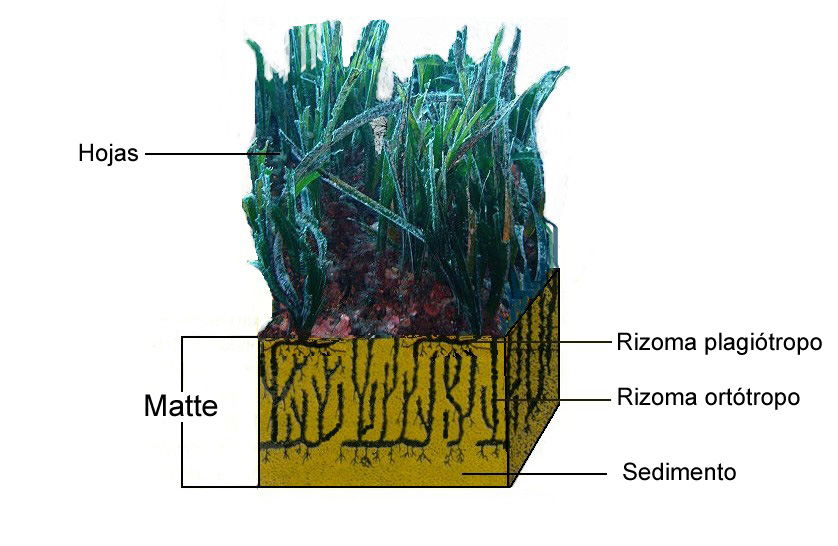
ROOTS: they mainly serve as a way to anchor to the seabed, because this plant is able to absorb nutrients from its entire surface, including the leaves.
STEM: P. oceanica has a modified stem called a RHIZOME that grows underground. Two types of rhizomes can be distinguished: PLAGIOTROPIC rhizomes, which grow horizontally, and ORTHOTROPIC rhizomes, which grow vertically. In this way they trap sand and other small particles, forming a structure called MATTE. This is how Posidonia grows and gains ground at an extremely slow pace — about 1 meter per century.
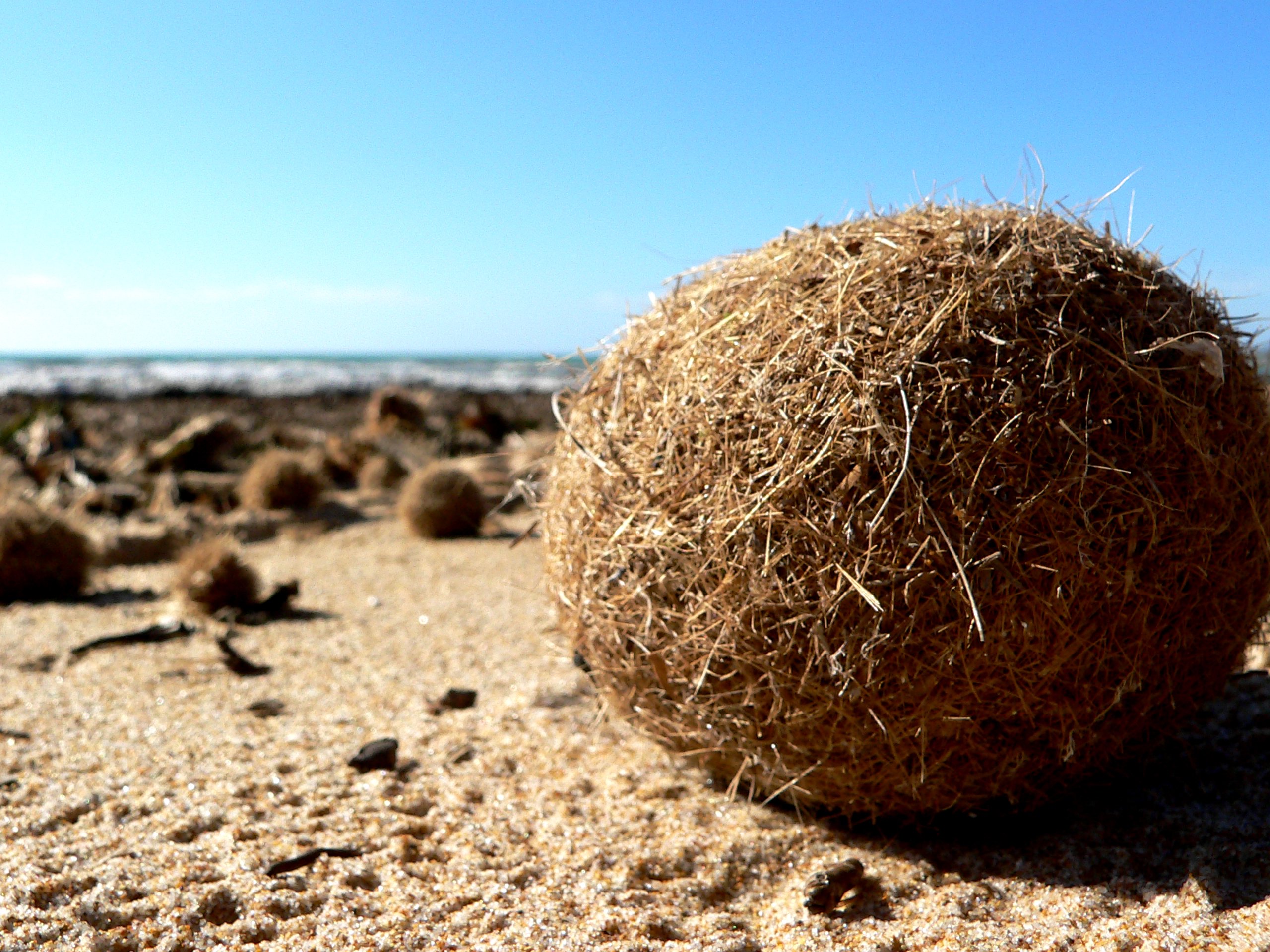
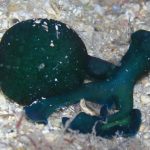
LEAVES: they are ribbon-shaped and can be up to 1 meter long. They are green when young, and when they are old and detach from the plant they turn brown, like tree leaves in autumn. They are grouped in bundles, with the youngest in the center and the oldest on the outside. Once dead, they can be carried by currents to the beaches where they form BANQUETTES. The fibrous leaf remains at the base of the rhizomes are shaped by wave action into EGAGROPILI, also known as sea balls!
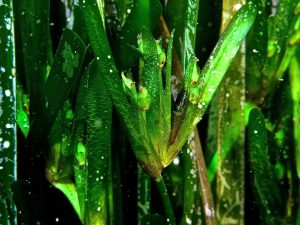
FLOWERS: they are green and grouped in a spike-shaped inflorescence. The pollen produced is transported by water currents, just as pine pollen is carried by the wind. Reproduction occurs in September–October. The photos of the flowers above were taken by Riccardo Buralli in 2015, at the end of an exceptionally hot summer, when in almost all dive sites around Elba Island it was possible to observe the flowering of P. oceanica in person.
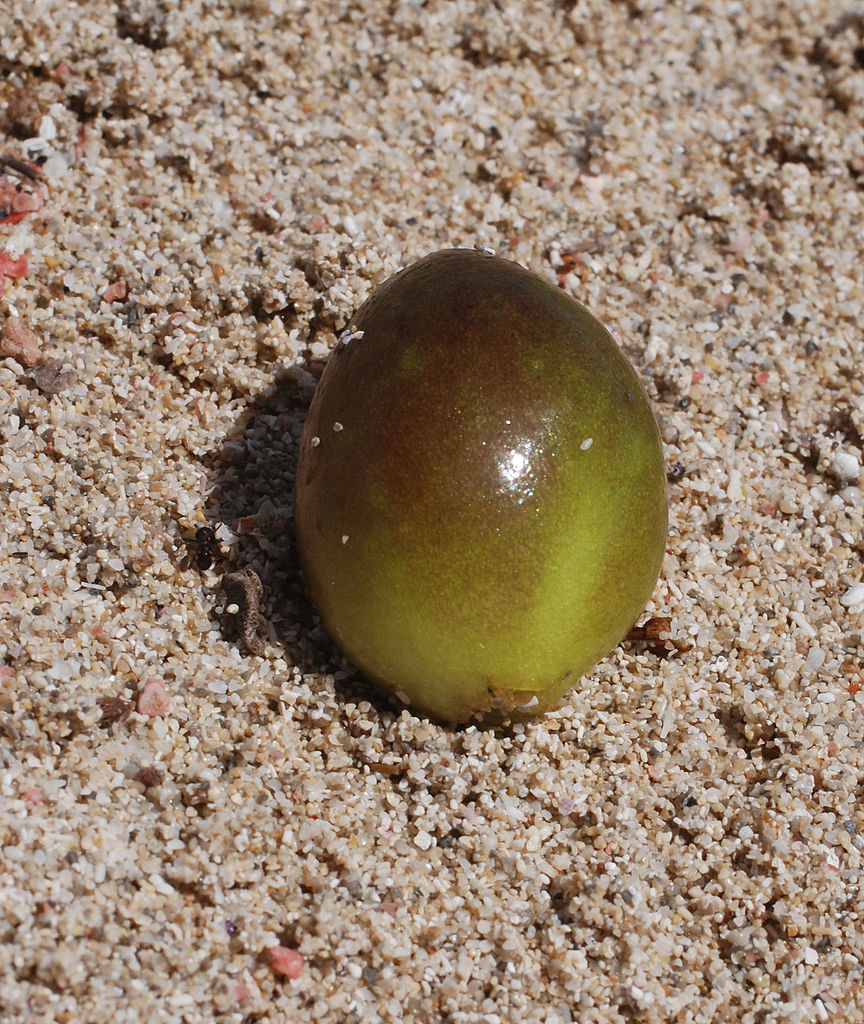
FRUITS: they are green too and, because of their shape, they are nicknamed “sea olives.” Once mature (April–May), they detach and float to the surface, so they can be transported far away — which is why you can occasionally find them on beaches. When the fruit decays, the seed inside is released and falls to the seabed where, if it finds suitable conditions, it develops into a new plant.
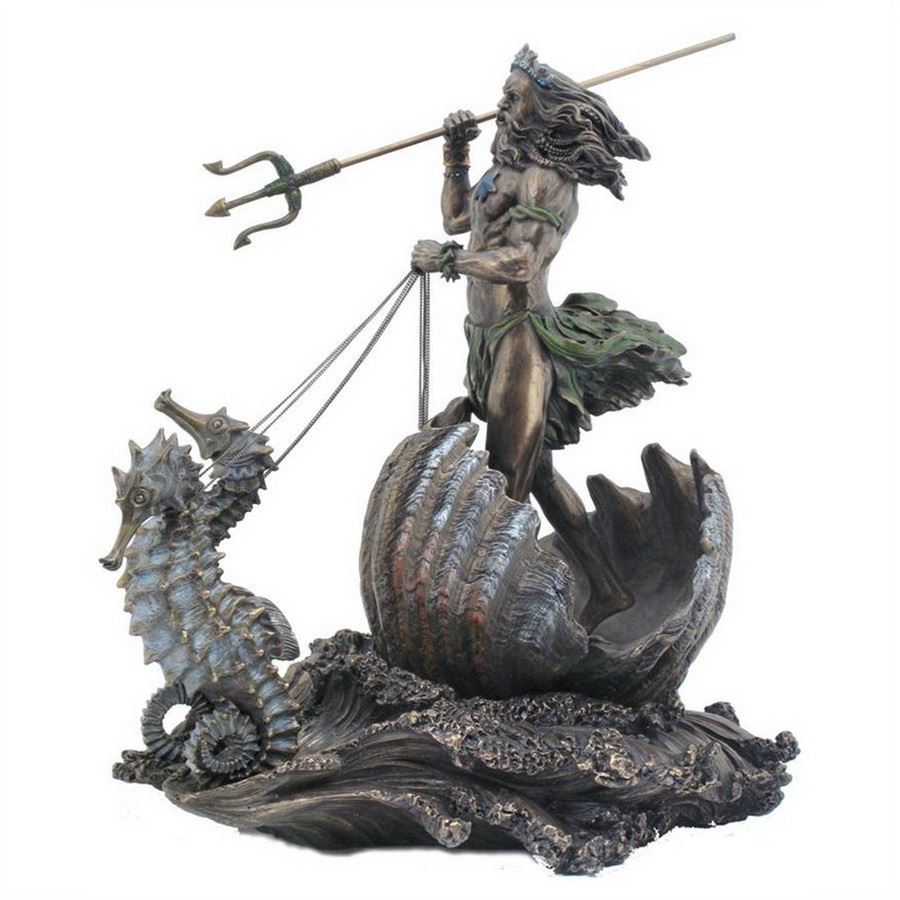
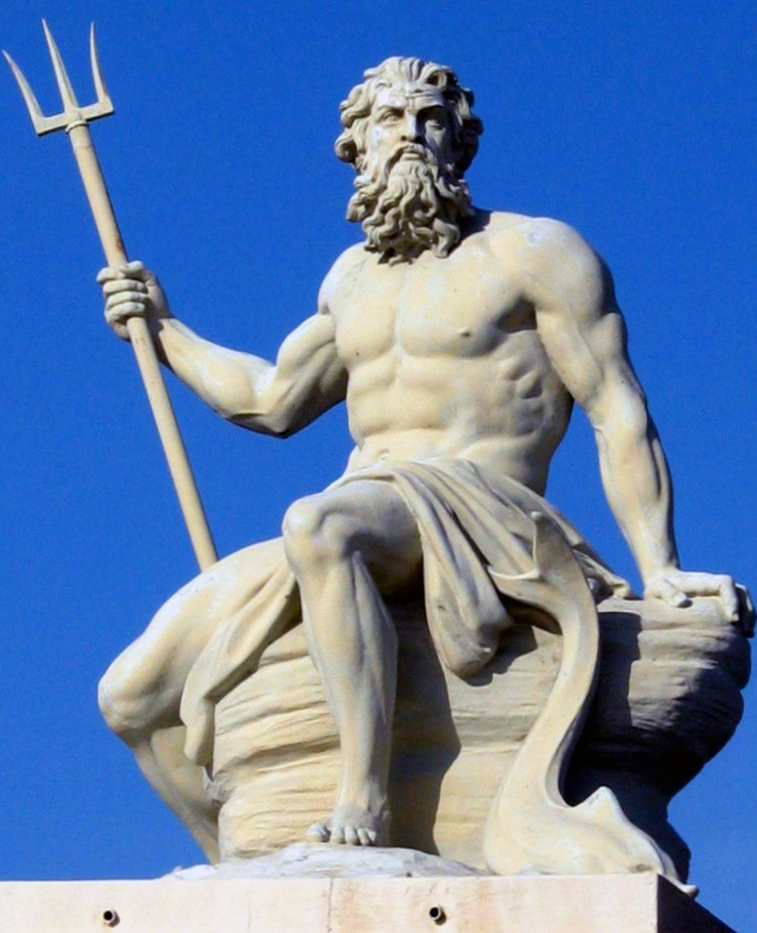
The name Posidonia comes from the ancient Greek god of the sea, to underline its great importance within the marine ecosystem.
Indeed:
- It is found only in the Mediterranean: there are 8 other Posidonia species in Australia, but Posidonia oceanica is found only in the Mediterranean. The largest meadow is the one between the islands of Formentera and Ibiza and it extends for about 15 kilometers. According to some studies it may be the oldest living organism (hundreds of thousands of years).
- It is one of the primary producers of oxygen (about 14 L/m²/year) and organic matter (about 20 t/ha/year): for this reason it is compared to tropical forests. Damage caused by humans could cause major harm, because their disappearance could generate a source of CO2 where there is currently a source of oxygen.
- It is an indicator of sea health: by observing the condition of the meadows (the set of Posidonia plants) it is possible to evaluate the level of pollution in the water body examined. For example, the number of leaves per shoot and the number of shoots per square meter are observed, as well as the type and quantity of organisms living on and among its leaves. The depth down to which it is found is, for instance, an indicator of water clarity. In very clear waters like those of Pianosa it extends down to 50 meters.
- It protects coastlines from erosion: in autumn, when its leaves detach, they are deposited on the shore and form BANQUETTES that protect beaches from winter storms; the shape of the MATTE and the long leaves above them near the coast dampen the action of currents and waves.
- As already mentioned, it provides shelter, protection, and food to a large number of small organisms and the juvenile forms of many others: the presence of long leaves makes the environment similar to Mediterranean scrub or undergrowth, where small animals can live and reproduce sheltered from large predators. Juveniles of many species find refuge in Posidonia until they are large enough to venture into open sea. The dense leaves reaching toward the surface trap and concentrate organic particles in the water column; for this reason, within the meadows there are many filter feeders such as Pinna nobilis, also known as the noble pen shell. Many other marine animals feed on the organisms that grow on its leaves or among the rhizomes.
- Very few animals feed directly on Posidonia oceanica: only the sea urchin Paracentrotus lividus, the crustacean Idotea, and the salema Sarpa salpa regularly feed on its leaves because its green tissues are rich in a bitter substance.
- The importance and vulnerability of this plant and its impact on humankind are protected by European and national legislation: the European Union “Habitat” directive defines Posidonia meadows as a priority habitat, and the meadows of Posidonia of Ibiza (Eivissa) and Formentera were declared a UNESCO World Heritage Site in 1999. The Sea Protection Service of the Italian Ministry for the Environment has defined a specific plan for mapping Posidonia along Mediterranean coasts, according to the “National program for the identification and enhancement of Posidonia oceanica and the study of safeguard measures from all phenomena that cause its degradation and destruction,” provided for by Law No. 426/98.
- The disappearance of these ecosystems, which can also sequester CO2 from the atmosphere and regulate water acidity, could worsen global warming and climate change, because their loss could generate a source of CO2 where there is currently a source of oxygen.
- The main threats to Posidonia meadows are coastal construction, pollution, the damaging effects of bottom trawling, anchoring, and invasive species*.
- These ecosystems, which cover about half a million square kilometers (km2), are in global decline, with an estimated loss rate of 1–2% per year, four times the loss rate of tropical forests; the percentage rises and reaches 5% in the Mediterranean. Moreover, the slow growth of these plants (2 cm/year) and low seed production make losses irreversible, as Posidonia recovery requires several centuries.
- *Caulerpa racemosa: in our waters this invasive alga (introduced after the opening of the Suez Canal; its spread was increased by its use in aquariums) has come into competition with P. oceanica. It is known that along the edges of the meadows, and when Posidonia plants are weakened, Caulerpa (mostly the species C. racemosa) invades suffering “mattes” and, when the seagrass is at a competitive disadvantage, it can reach exceptional sizes, shading and therefore damaging its competitor.