
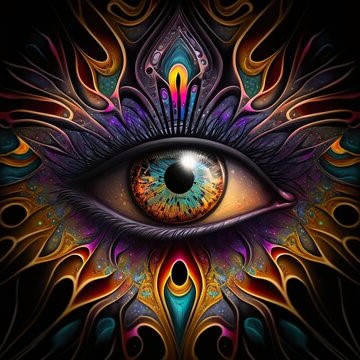
Eyes, as we know, never lie. The very famous saying “the eyes are the mirror of the soul” refers to the eye’s ability to reflect the feelings, emotions, and sensations that run through us. The belief that the eye reveals a person’s temperament is as widespread as the idea that the eye, as a “window opening onto the world,” represents the outlet of thoughts, both positive and negative. The latter especially, expressed through one’s gaze, are believed to generate harmful effects on those who are the object of envy or hostility.
The “evil eye” is in fact the name given to misfortune cast through a glance upon those who are envied or disliked. To neutralize its effects, throughout the history of all human societies, people have relied on objects believed to protect against harm or danger, such as amulets or talismans. Many objects are thought to counteract the evil eye, but those resembling the shape of an eye remain among the most widespread.
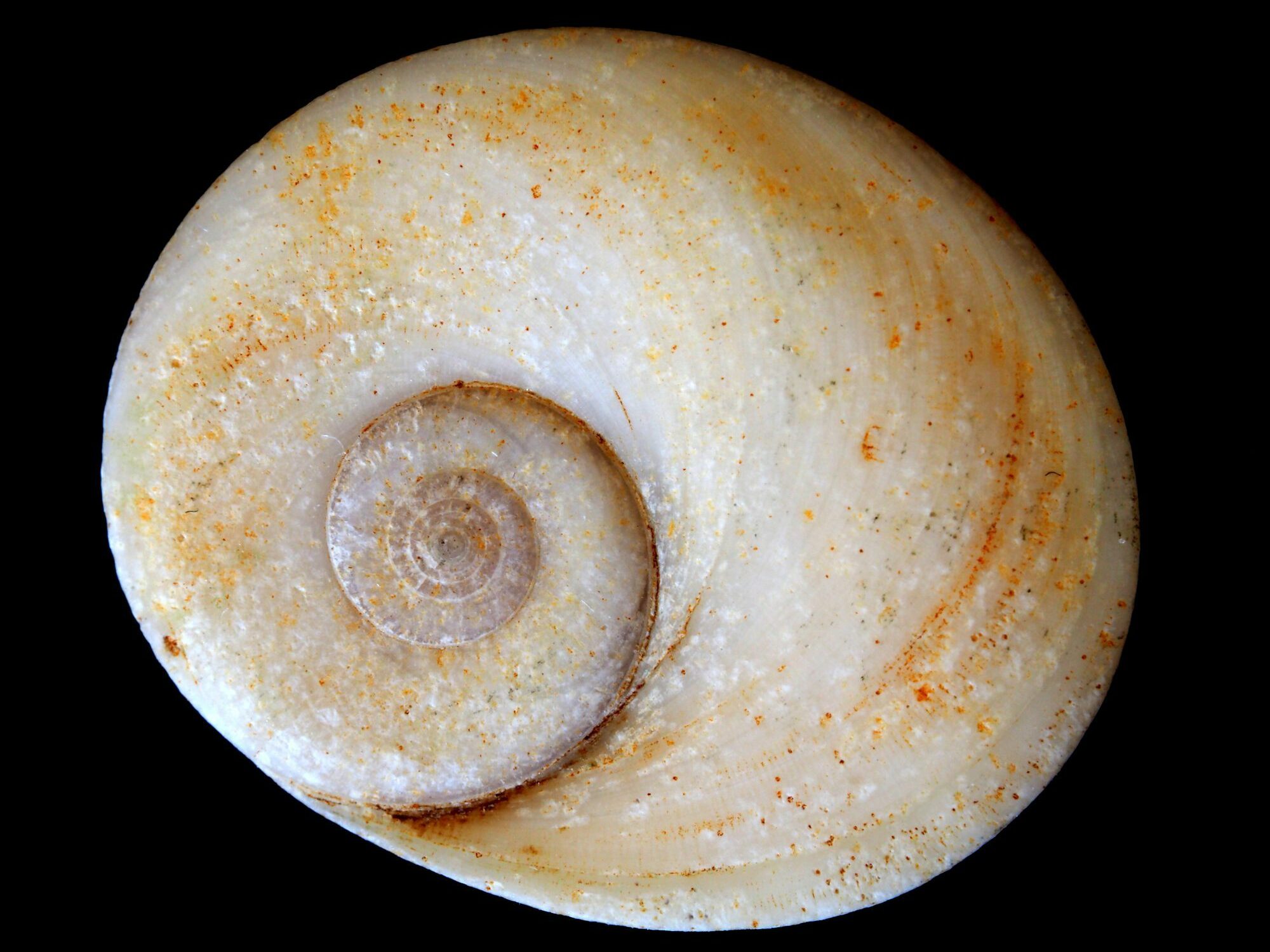
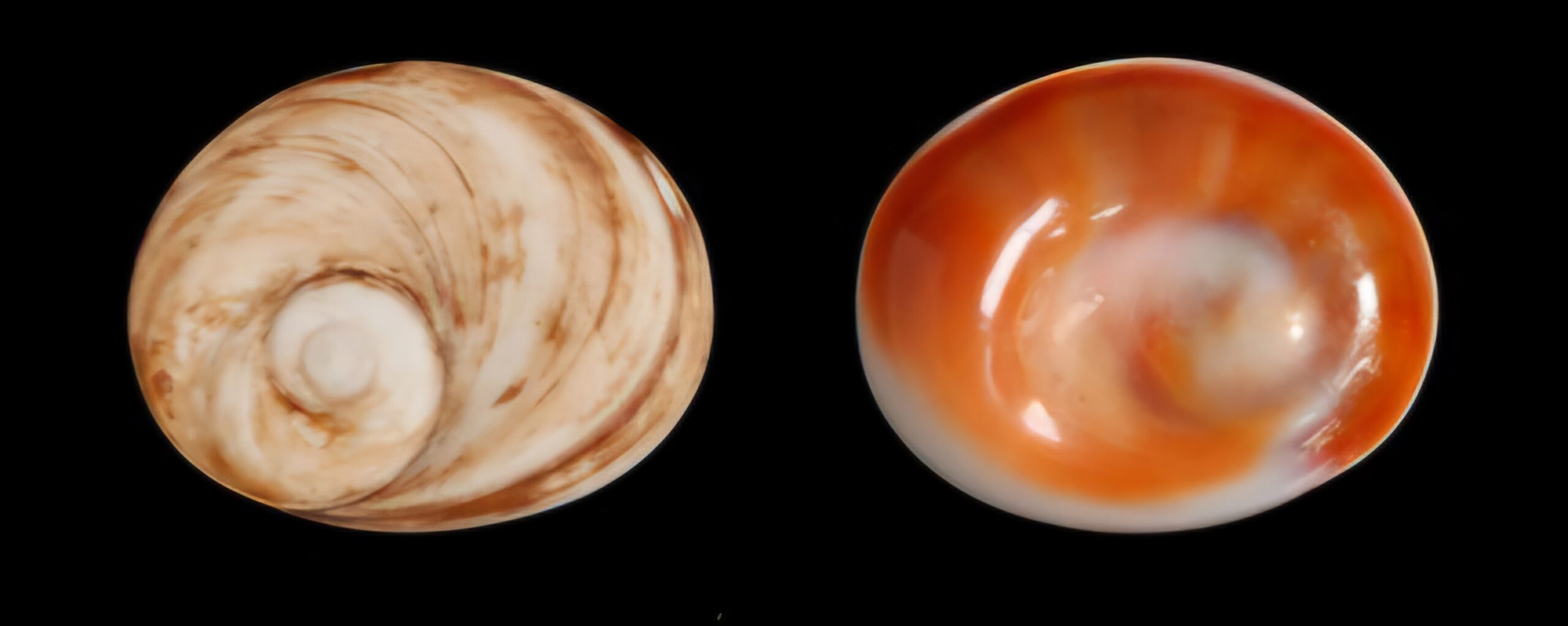
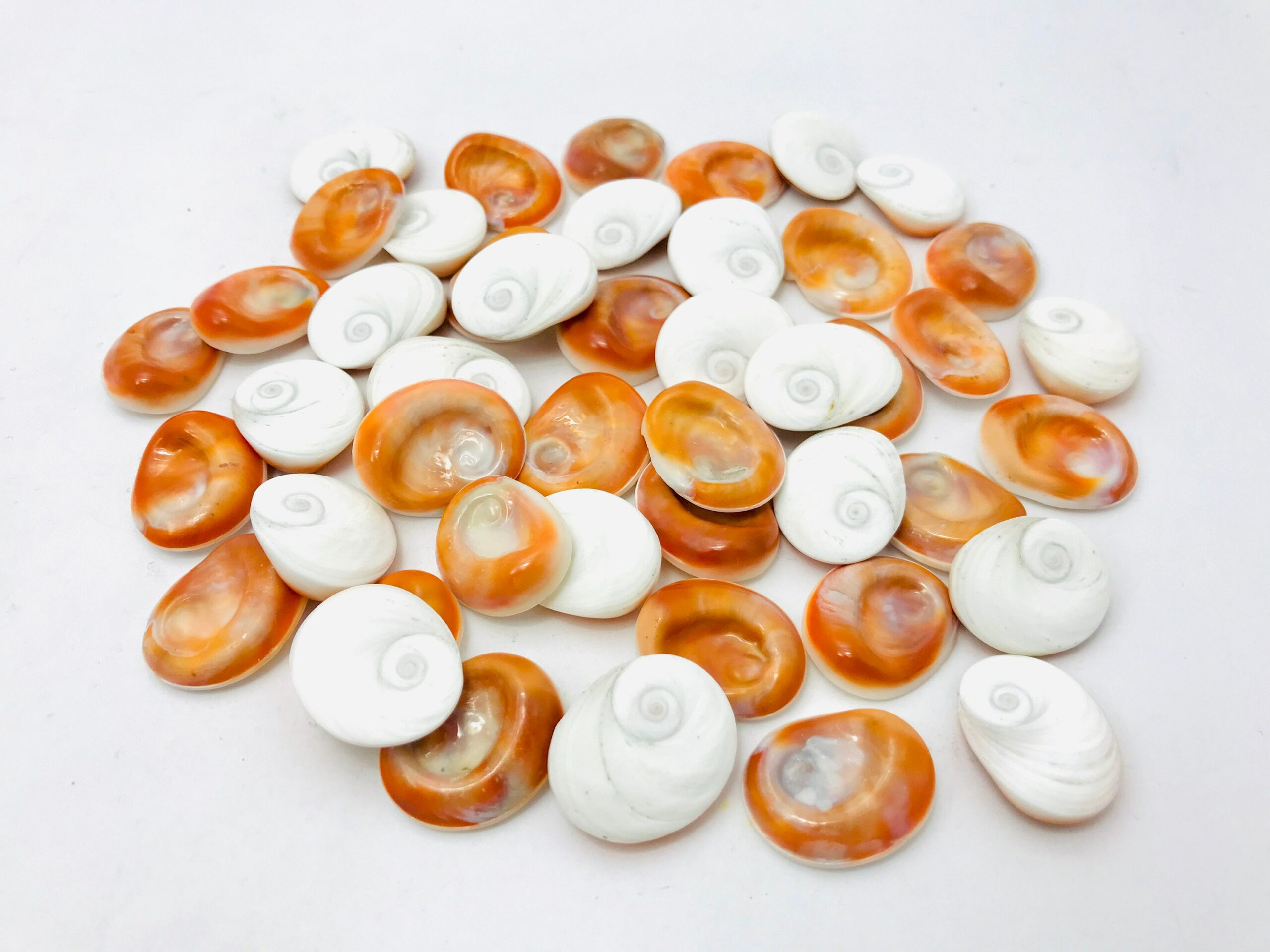
In India, for example, this small operculum is considered the representation of the “third eye” of the deity Shiva and is used as a powerful amulet believed to have beneficial effects on the energy flows that pass through our entire body.

In Italy, it has been associated with the myth of Santa Lucia, of which various versions have been passed down.
One of the most widely accepted tells that, in the 4th century A.D., the young Lucia, from a noble family of Syracuse, obtained the healing of her mother, who suffered from an incurable hemorrhagic disease, thanks to prayers offered during a pilgrimage to the tomb of Saint Agatha in Catania. After the miracle, Lucia revealed to her mother her firm decision to dedicate herself to Christ and donate her wealth to the poor. To distance herself from suitors and remain faithful to her devotion, she tore out her eyes and threw them into the sea. Completely devoted to prayer, Lucia performed numerous miracles. As a reward for her devotion, the Virgin Mary restored her sight by granting her beautiful and radiant eyes. For this reason, Santa Lucia is traditionally considered the protector of eyesight. Her cult is observed throughout Italy and in many parts of the world.
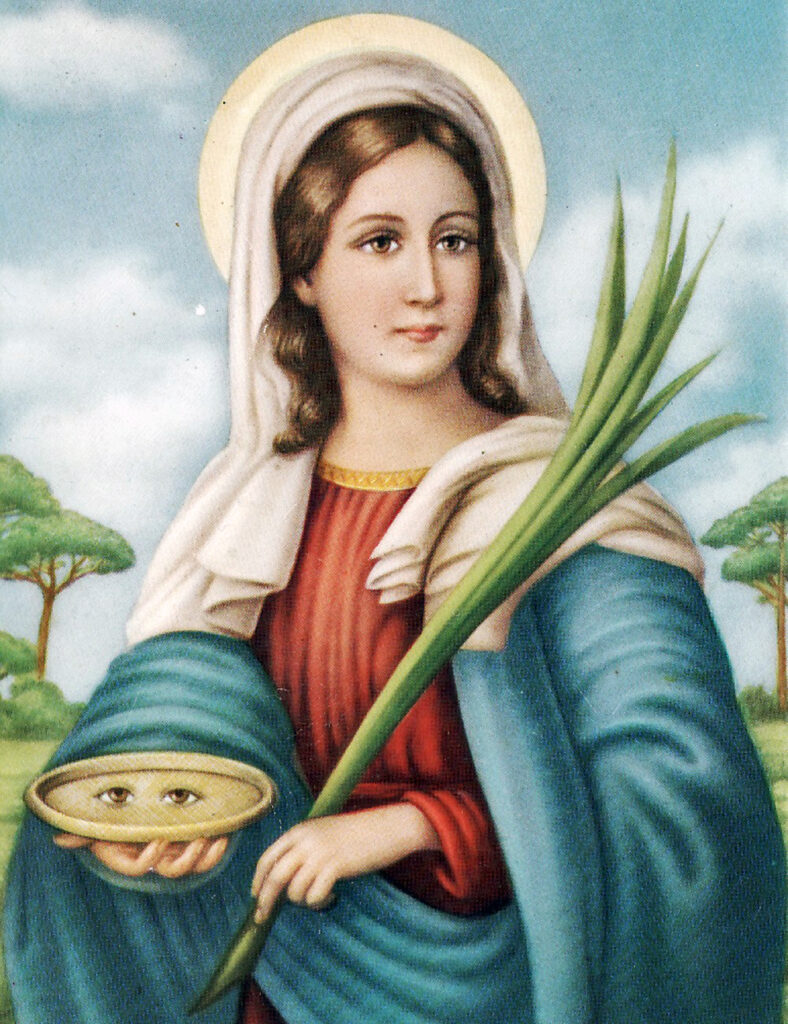
In some northern Italian cities, for example, there is a tradition linked to the “gifts of Santa Lucia,” who replaces Santa Claus and brings presents to children on her feast day, December 13th, traditionally considered the shortest day of the year.
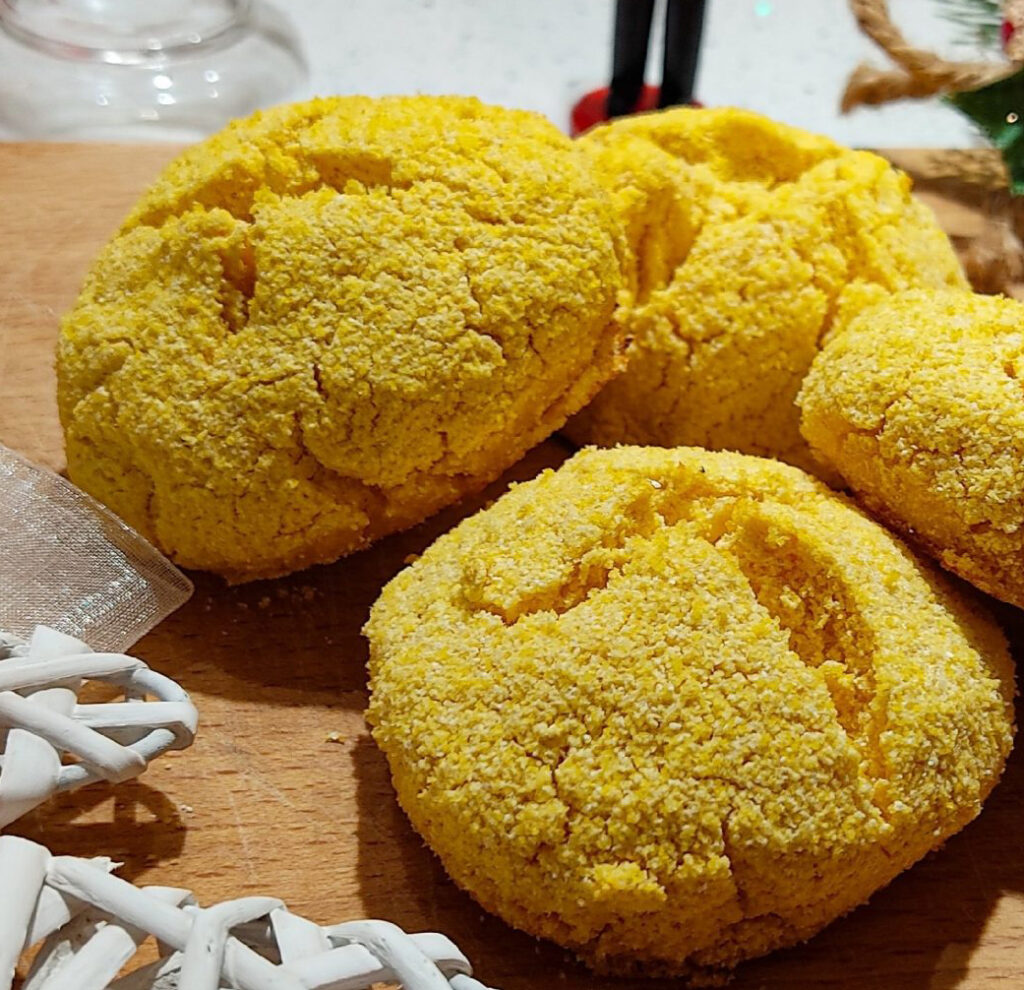
In Messina, my wonderful hometown, on December 13th people do not eat bread or other foods prepared with wheat flour, to commemorate the end of the famine of 1646 when, according to legend, a ship loaded with corn arrived in the harbor on the very day of Santa Lucia. In addition to the classic rice arancini, every bakery prepares special rolls made with yellow corn flour, which appear only once a year… and they are delicious! I remember that during the first years I lived away, I used to ask my mother to buy and freeze some Santa Lucia rolls for me, which I would then eat during the Christmas holidays.
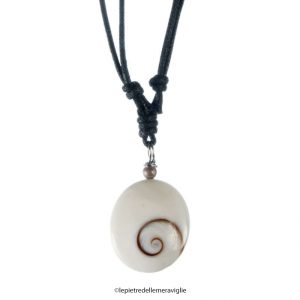
Returning to the Eye of Santa Lucia, it is fascinating how over time it has become one of the most widespread talismans or amulets typical of seafaring people. Among islanders in particular, it was very common, along with various objects made from coral. Transformed into a small pendant, guardian of sacred and pagan symbols, it is considered a gift of nature and a sign of belonging and recognition for people who come from the sea.
But not only that. It is also a symbol of knowledge and wisdom, as the spiral represents development and movement. It is also associated with the power of the “good eye,” capable of blocking the effect of the “evil eye.” Legend has it that the Eye of Santa Lucia can watch over its wearer and protect them from negative forces, channeling and enhancing positive energies, thus exerting a beneficial effect on the person as a whole and helping to achieve balance and harmony between body and mind.
Leaving aside the difference between amulet and talisman (because I would have to start from the studies of Pliny the Younger and my research would turn into a treatise), I can say that over the years I have seen many diver friends wearing a pendant of this kind, and some of them explained to me their belief that wearing or holding an Eye of Santa Lucia in difficult moments could help ward off bad luck or simply bring a little extra fortune. According to these accounts, if one day you realize that the Eye has lost part of its beneficial effects, following the instructions provided by any respectable alchemical manual, it would be enough to immerse it again in seawater at night and then let it dry under the light of the full moon, so that it can recharge with positive energy.
Speaking of alchemical practices and legends intertwined with human feelings, the words of a book came back to my mind — The Alchemist by Paulo Coelho — which seem meaningful to share here:
“The soul of the world is nourished by people’s happiness. Or by unhappiness, envy, jealousy. To realize one’s Personal Legend is the only real obligation of men. Everything is one. And when you truly want something, the whole universe conspires to help you achieve it, no matter how foolish it may seem. Because they are our dreams, and only we know what it costs to dream them.”
The Eye of Santa Lucia and Elba
The first time I listened to the pre-dive briefing for the Santa Lucia Shoal, north of Capo Bianco, I was amazed by its coincidences… First of all, the name of the dive site. In the past, before satellite instruments and echo sounders existed, the shoal was located using land references visible from the boat. By triangulating these reference points, divers could determine the exact position of the site. One of these landmarks was precisely the Church of Santa Lucia, located on the hill of the same name in Portoferraio — a place full of poetry and from which one can admire a breathtaking sunset…
But that is not all. As soon as you dive, you immediately realize you are in an extraordinary place, rich in life and with very high biodiversity. It is one of my favorite dives — perhaps one of the most beautiful on Elba, if not the most beautiful (hence the saying: “The Santa Lucia Shoal is the most beautiful dive there is”).
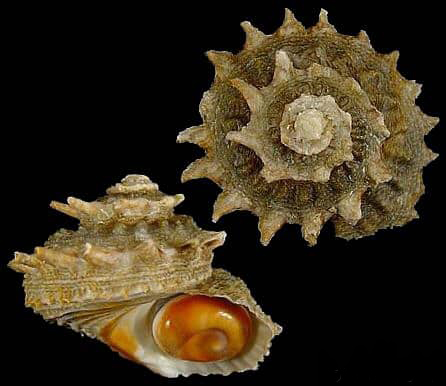
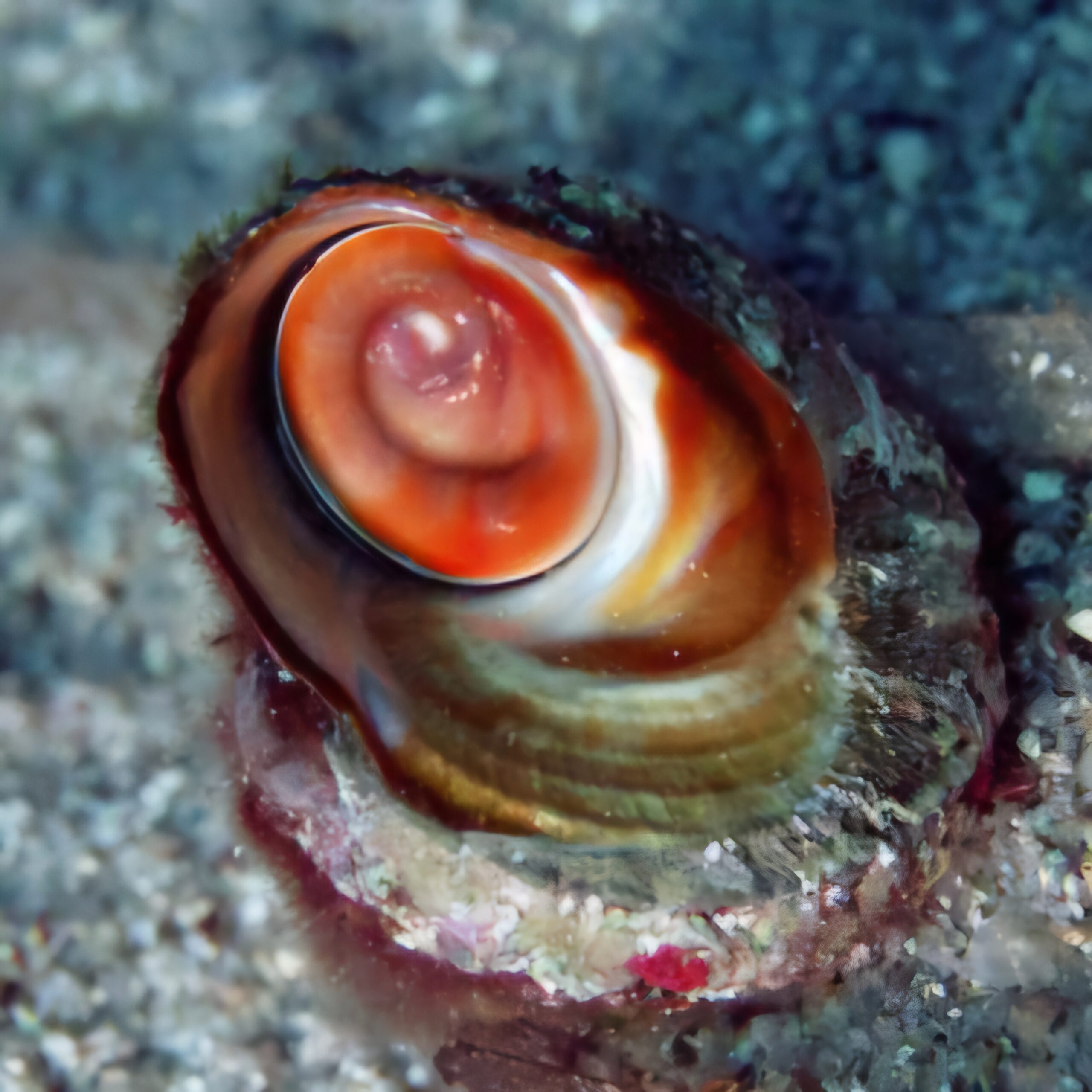
Returning to the coincidences, around the Santa Lucia Shoal lives a particular mollusk, our friend Bolma rugosa, difficult to observe during the day but appreciable during night dives. Well, our little snail must really love the Santa Lucia Shoal… or perhaps the marine currents love it — I cannot say for sure. But if you look carefully at the sandy seabed around the shoal, you can easily spot numerous Eyes of Santa Lucia, clearly visible, resting on the sand.
These coincidences have always given me the feeling that the Santa Lucia Shoal is a magical place, and whenever I give the pre-dive briefing, I try to convey a bit of that magic…
Douglas Coupland, in his book “Five Hours from Now”, writes:
“Coincidences are so rare that it is almost as if the universe were designed solely to prevent them. So when in life you experience a coincidence or something extraordinary, it means that someone or something has worked very hard to make it happen, and that is why we should always pay attention.”
I invite you to pay attention. To notice all these wonderful calcareous opercula that populate the Santa Lucia Shoal. Come and see them. Enjoy observing them — between a school of barracudas and one of amberjacks, between a moray eel sharing its den with a conger eel and a scorpionfish that has turned a feather duster worm into its personal umbrella, between the explosion of colors on rock walls covered with sea daisies (Parazoanthus axinellae) interspersed with sea lilies (Crinoids) that often surprise us with their sinuous swimming, among colorful nudibranchs and curious octopuses.
Come and see this and much more, in a dive spot so magical it seems to have been created by the pen of J. K. Rowling. And believe me: there is no need to collect, touch, or wear the Eyes of Santa Lucia. Leave them there. Just looking at them is enough to benefit from the benevolent effects attributed to them.
Diving at the Santa Lucia Shoal will make you feel in harmony with the world and protected from misfortune. And if those positive effects fade once you return to dry land? Simple — just plan another dive at the Santa Lucia Shoal!
Sergio Sardo